
AI based assistant systems:
The Future of Crane Operation
AI based assistant systems:
The Future of Crane Operation
We have developed a range of crane assistance systems —the CraneAI assistants— that use Artificial Intelligence to support crane operators during repetitive, tiring, and hazardous work, significantly improving workplace safety. Our crane control system, AutoCrane, operates cranes fully autonomously using Artificial Intelligence.
AutoCrane and the CraneAI assistants use the CraneLink interface to exchange data and control commands with the crane's programmable logic controller (PLC). This makes CraneLink the foundation for all crane assistance systems and the automated crane control system AutoCrane.
CraneLink is equipped with two essential features for safe crane operation: as a crane assistance system, CraneLink AR provides visual support for crane operators in the cabin or in screen-equipped control centers, while CraneLink RC enables safe remote control of cranes over long distances.
CraneLink AR: Visual Support for Crane Operators
From a height of 40 meters, precisely positioning the hook or grab over the target is a major challenge for crane operators. Signal instructions from the ground are often imprecise, leading to operational delays. In particular, parallax when viewing from great heights and the lack of depth perception when operating from a control center make the work especially difficult. When cranes are remotely controlled from a control center via screens, CraneLink AR supplements the depth perception that is missing on those displays.
The advanced crane assistance system CraneLink Augmented Reality (AR) by PSIORI projects real-time digital information directly onto a screen in the cabin:
- The Virtual Plumb Line displays the exact position of the hook or grab above the ground and objects.
- The Virtual Collision Indicator draws a line on surrounding walls and objects at the current height of the hook or grab.
This significantly reduces the risk of collisions or even accidents. Like all of our AI-based crane assistant systems, CraneLink AR can be retrofitted to the crane at any time.
Augmented Reality for the operator: Safely Navigating in 3D
CraneLink's Augmented Reality features clearly show the grapple or hook's position in 3D space. This is a great help for the operator as they drive the load to its destination, and increases safety and speed.
Intuitive position recall for
crane operators
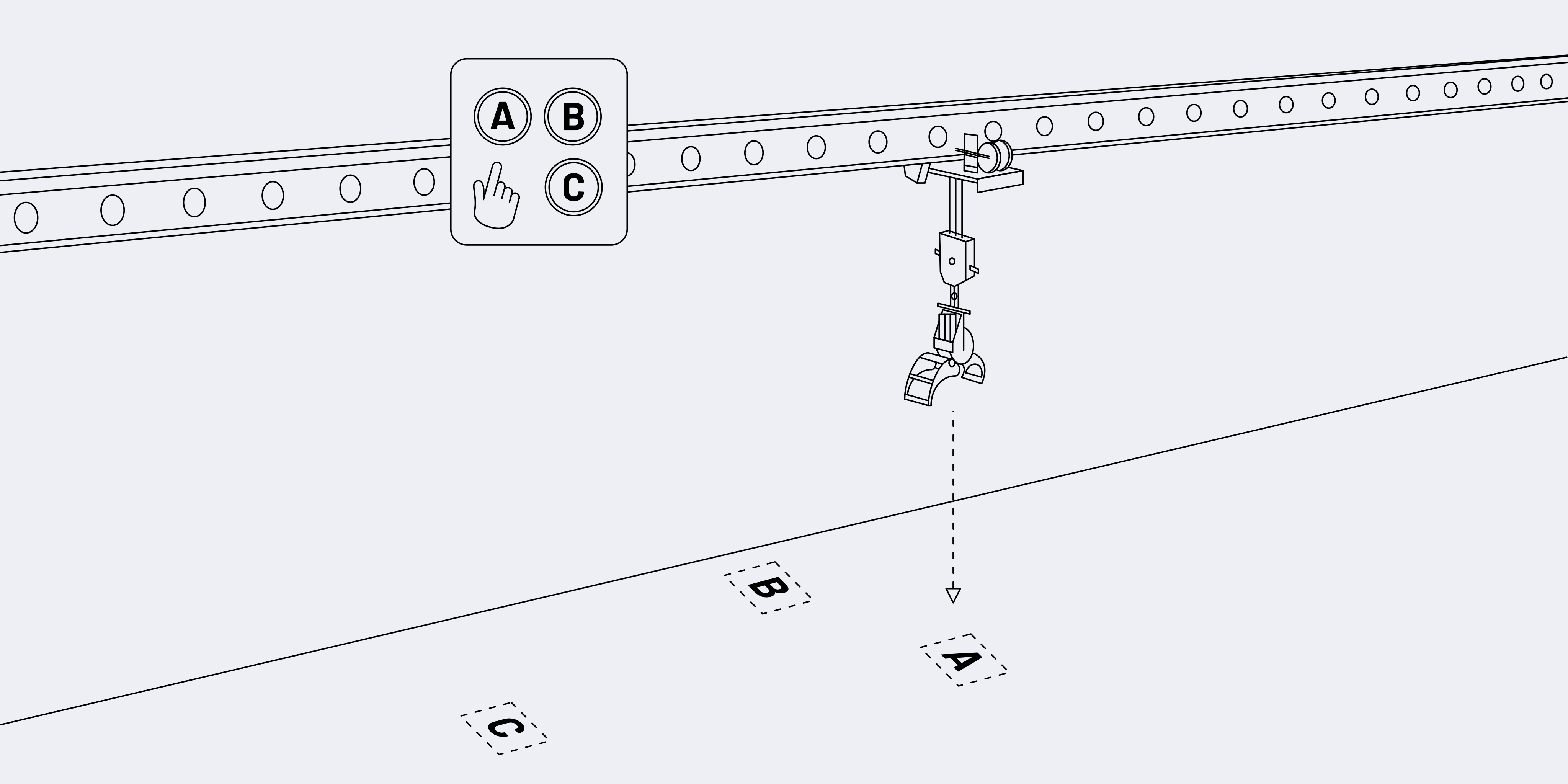
Our Shortcuts Solution simplifies repetitive crane operations by allowing operators to store and recall precise grapple positions at the touch of a button.
Active load stabilization for
smooth crane operation
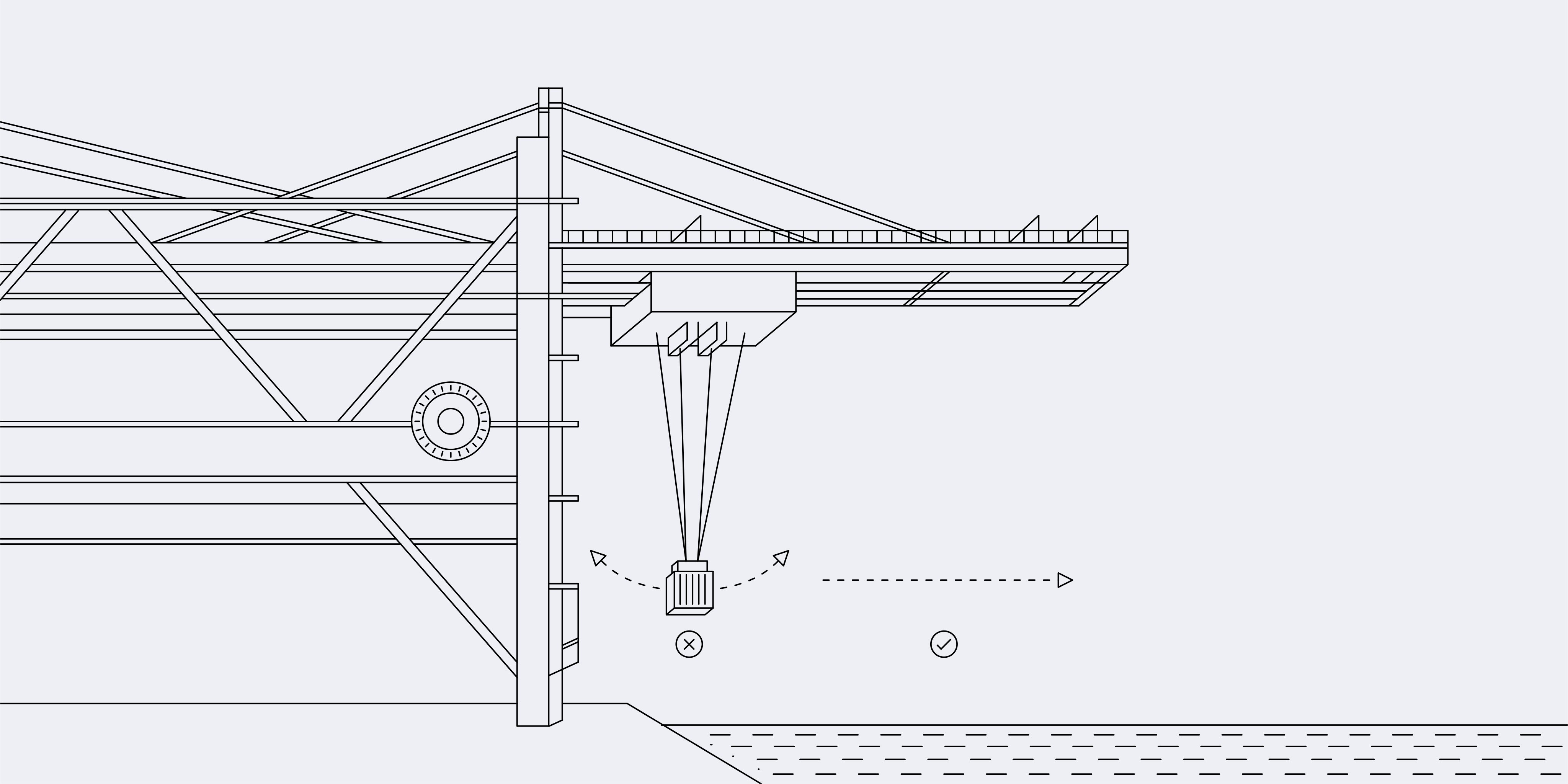
Crane Remote Control via the Internet: Safe Remote Operation with CraneLink RC
CraneLink Remote Control enables video-monitored remote operation of cranes via the internet at ultra-low latency. This allows video-assisted crane remote control from virtually anywhere in the world. A monitored emergency stop system enables the crane operator to safely bring the crane to a halt at any time, even over long distances.
CraneLink Remote Control (RC) operates reliably and securely via LAN or the internet. Unlike conventional video-based remote control systems, the CraneLink RC crane remote control is not limited to just a few hundred meters.
Remote Control via Standard Infrastructure
Standard internet infrastructure is sufficient for the secure and low-latency transmission of video and control signals. Expensive fiber-optic cabling or other custom solutions do not need to be installed on the job site or the crane.
Safe and Reliable E-Stop
The emergency stop circuit complies with the requirements of ISO 13849 (PL d). If the system detects that the maximum allowable latency has been exceeded, the emergency stop is triggered immediately on the crane.
Excellent Orientation in 3D Space with CraneLink AR
On the screens in the control center, crane operators lack depth perception, making navigation in 3D space difficult and risky. CraneLink AR supports crane operators by displaying the Virtual Plumb Line and Virtual Collision Indicator.
Stationary cranes can be retrofitted with the CraneLink RC crane remote control system.
Crane Automation and CraneAI Assistant Systems with CraneLink
In addition to CraneLink AR and CraneLink RC, CraneLink provides the entry point for step-by-step crane automation with PSIORI’s AI crane system. The CraneAI crane assistants developed by PSIORI, as well as the partially or fully autonomous control of the crane via the AI-based control system for autonomous cranes, AutoCrane, are all based on CraneLink.
CraneAI Assistants For Your Smart Crane
With CraneLink, crane operators can use the CraneAI assistants for smart cranes and delegate individual control tasks: record waypoints and entire routes to automatically replay them later; combined with collision avoidance, the crane navigates around obstacles, and with the People Tracker, the crane stops as soon as people approach the working area. Path planning calculates the optimal route from start to destination based on the selected priority: speed, energy consumption, or wear and tear. In addition to traditional passive sway reduction, active sway suppression eliminates all types of pendulum motion, even if caused by the lifting process, contact between the load and an object, or wind; even unwanted load rotation is compensated for by our TorsionKiller. Time Machine records all crane activities—whether manually operated or AI-driven—and can replay them later for training purposes or incident investigation.
And with the smart crane system AutoCrane, crane operators can hand over individual subtasks or full crane control to Artificial Intelligence, which operates the crane safely and reliably day and night without interruption, partially or fully autonomously.
All CraneAI assistants and AutoCrane can be used individually or combined in any desired configuration.
Collision Prevention
Intelligent obstacle detection for safe crane operation
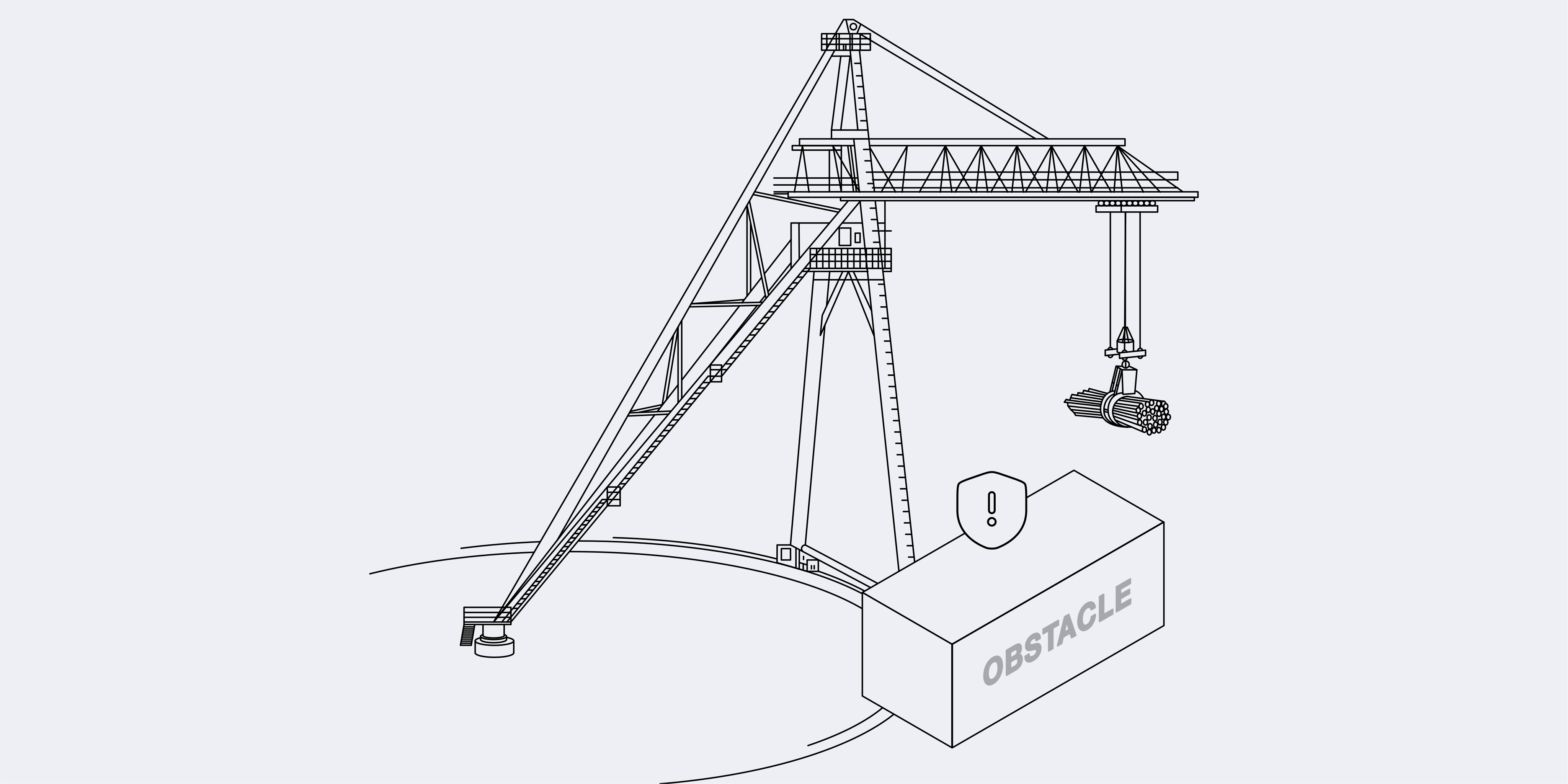
If the system detects an impending collision between the grapple or hook and any object in the crane's working area, it creates an alert on the HMI and stops the crane. When used with partial or full autonomy, the system will circumvent the obstacle.
More infoPeople Tracker
Enhanced safety through real-time monitoring
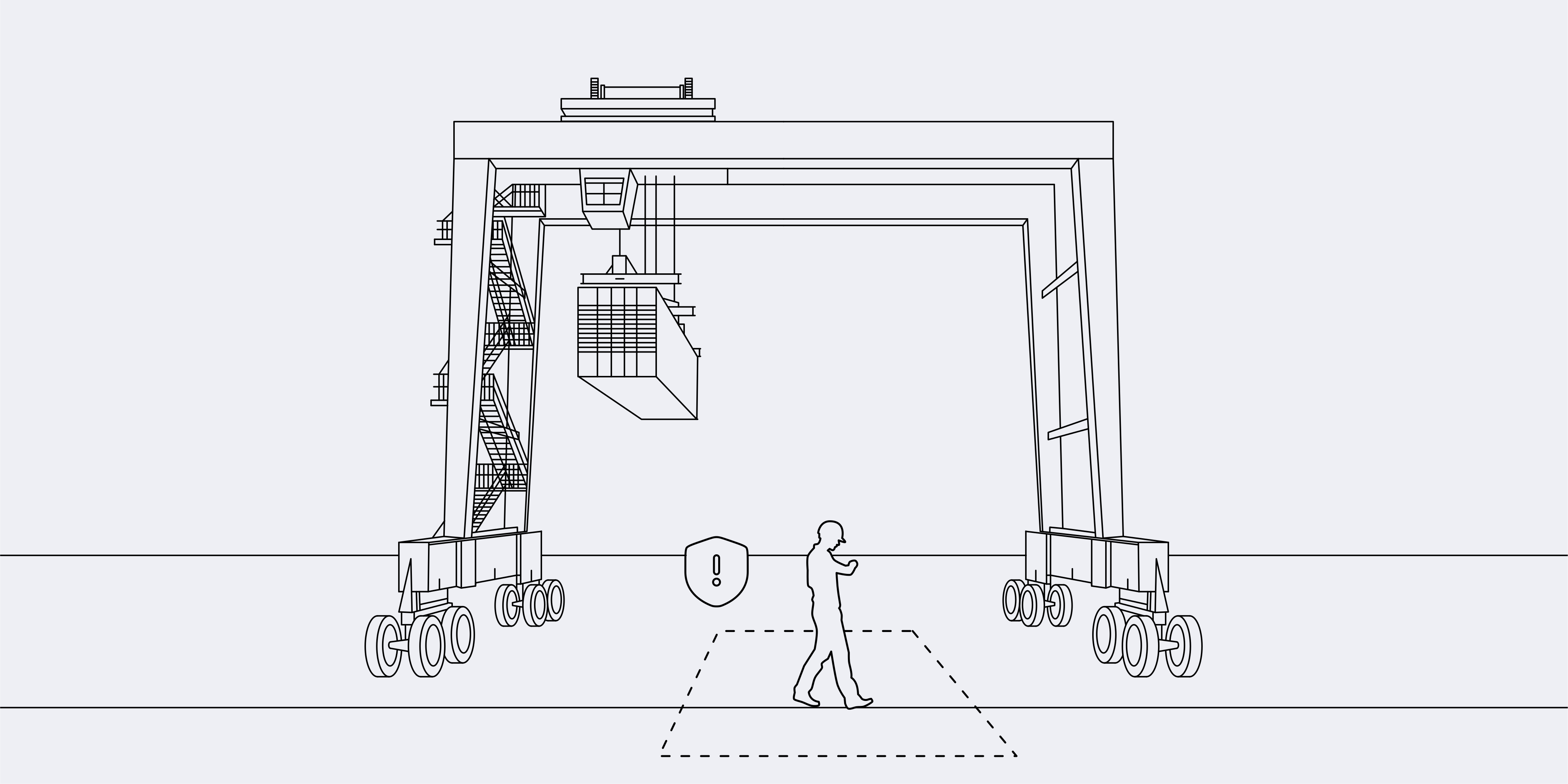
Our system recognizes people via AI while they are in the crane's operating area. It alerts the crane operator and, if desired, smoothly halts the system to prevent dangerous situations.
More infoRemote Control
Safe, low latency, 3D augmented remote control - local or via internet
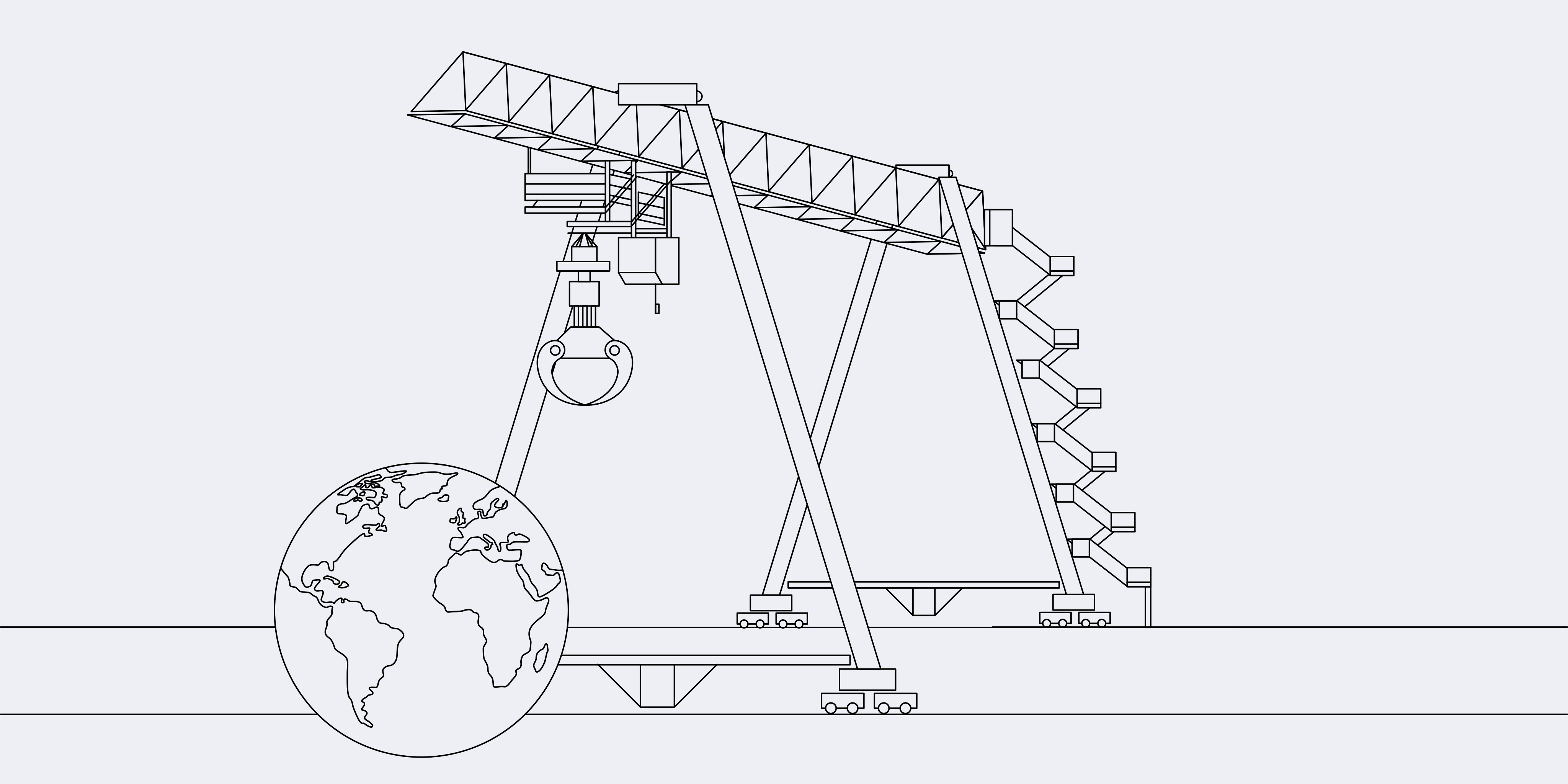
CraneLink Remote Control enables video monitored remote operation of cranes over the internet at extremely ow latencies. This allows cranes to be remotely operated with video support from virtually any location on the planet.
More infoTime Machine
Complete data replay of crane operations
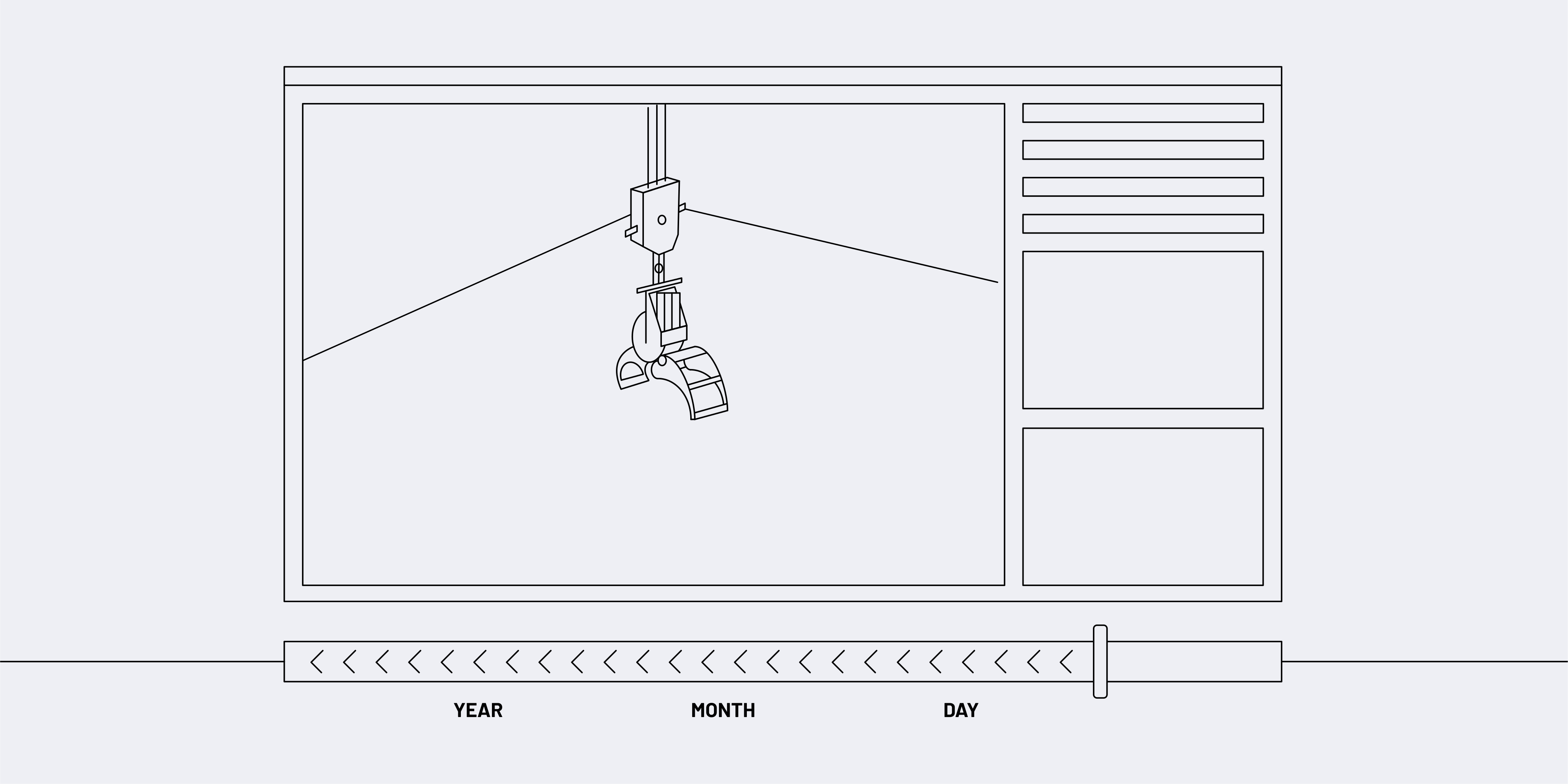
Our Time Machine module records and stores all available sensor data from the crane in realt time, creating a comprehensive log of everyday operation.
More infoPath Planning
Intelligent crane movement optimization
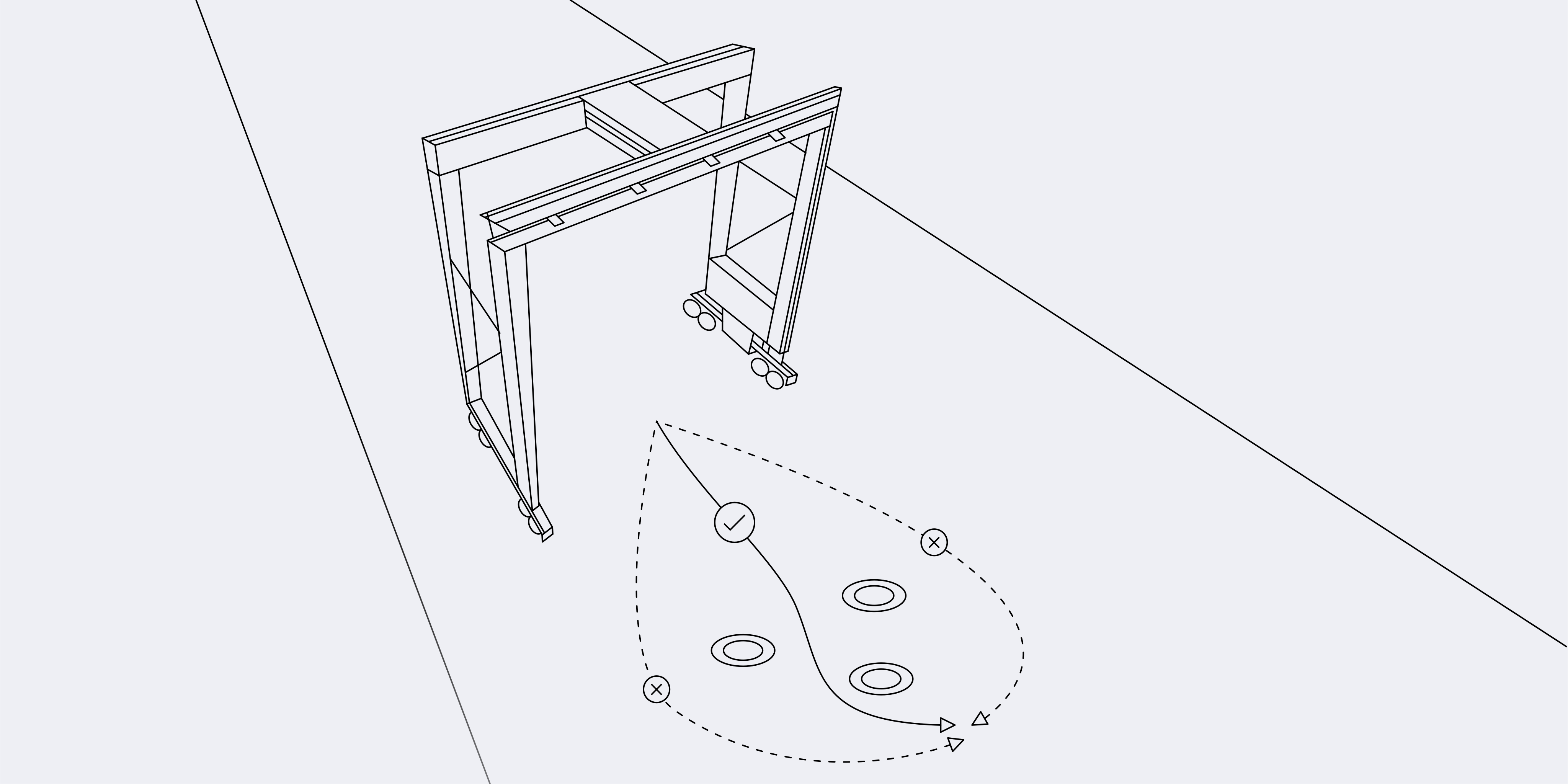
Our Path Planning system intelligently calculates the optimal movement path for the crane, fully tailored to the operator's priorities and working conditions.
More info

Volker Voss
Managing Director Sales
Get in touch
Interested in learning more? - Get in touch directly with our Managing Director of Sales. Simply press the button below, ask your questions, and we’ll get in touch to discuss how our solutions can support your operators.
Subscribe to Newsletter
PSIORI was founded in 2016 by and around former students and employees of the research groups Prof. Dr. Wolfram Burgard (Autonomous Intelligent Systems) and Prof. Dr. Martin Riedmiller (Machine Learning) of the Technical Faculty of Freiburg. In the areas of SLAM and Reinforcement Learning, these research groups have decisively driven the state of research. In our research, we have dealt with the topics of autonomous driving, mobile robotics, machine learning, neural networks, reinforcement learning and generative AI as well as in the application with problems from the areas of sensor processing, self-location and mapping and with robot, vehicle and machine control.